The Penny Black & Penny Red — The Beginning of Everything.
There are moments in history when a small, almost unassuming object ends up carrying far more significance than its size would suggest. The Penny Black is one of those objects. It is barely larger than a thumbnail, printed in a sober black ink, and yet it marks the exact point where the modern world of communication begins. Before it, letters were a luxury, a negotiation, or a gamble. After it, they became something ordinary people could send without hesitation — a quiet revolution delivered through the post.
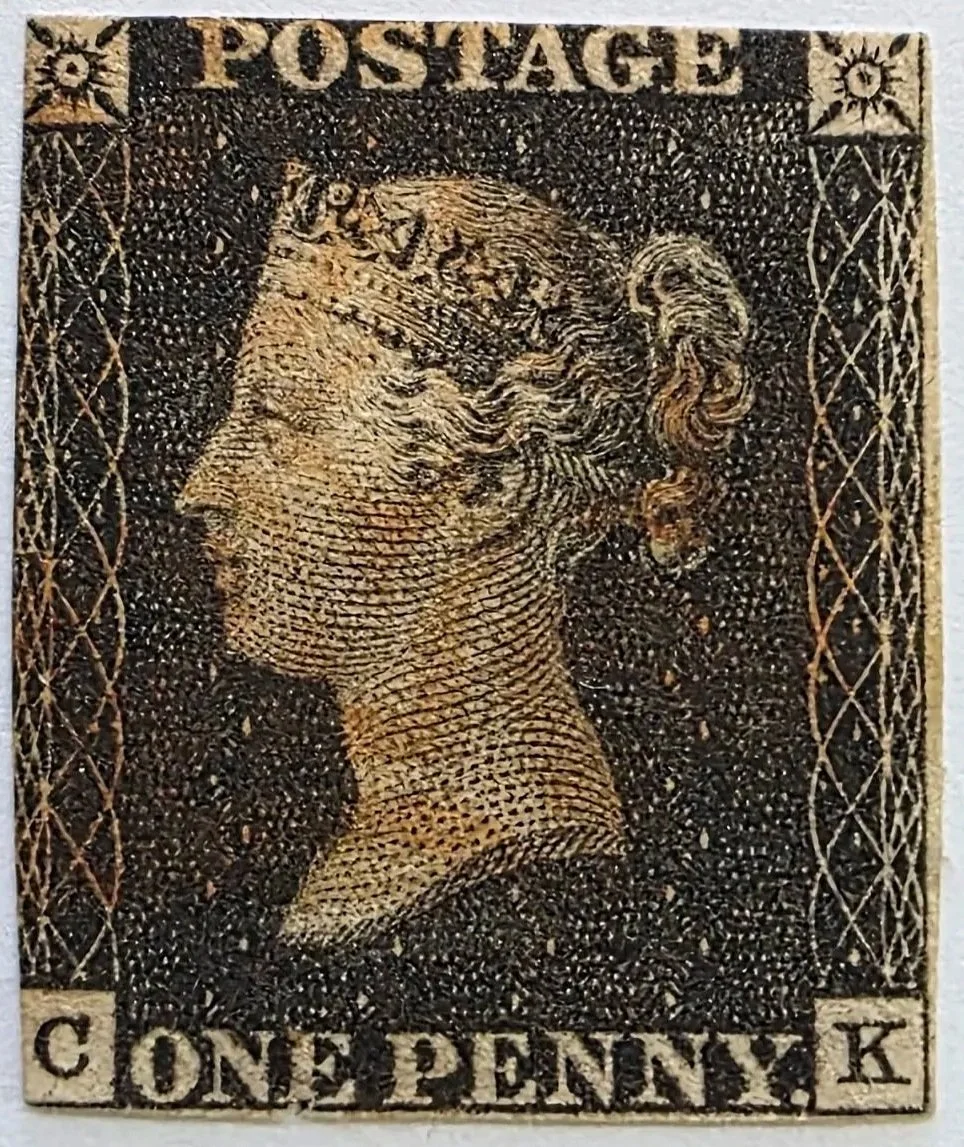
One Penny Black 1840
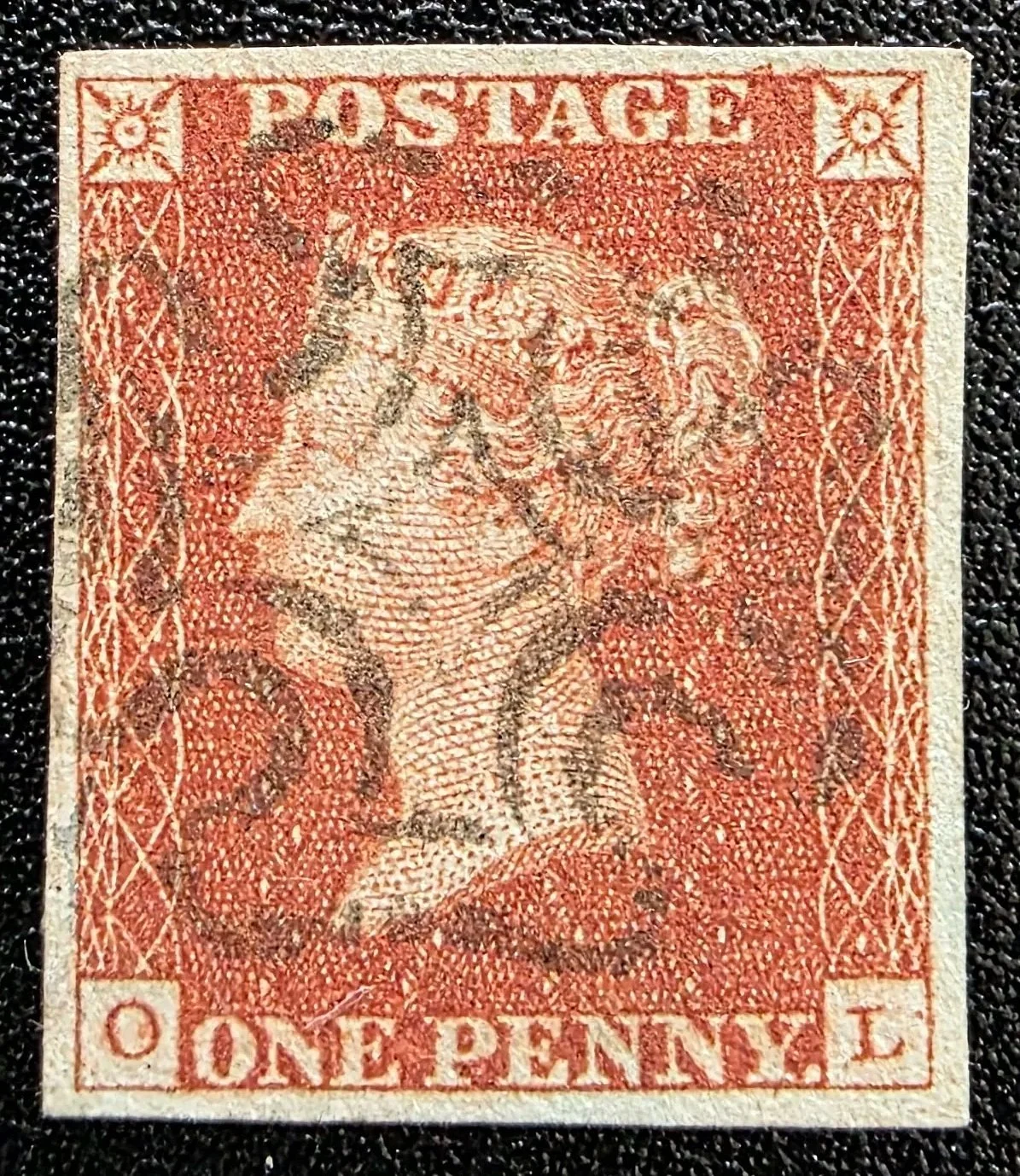
One Penny Red 1841
The world that produced the Penny Black was a strange one by modern standards. Postage was paid by the recipient, not the sender, which meant that a letter arriving at your door was as much a financial burden as a message. Rates were inconsistent, corruption was common, and the entire system favoured privilege over practicality. Members of Parliament enjoyed free postage, and many used the privilege with cheerful abandon. Ordinary people, meanwhile, often refused letters outright, leaving messengers to trudge back with undelivered mail.
Rowland Hill saw the absurdity of this and proposed something radical: a uniform, prepaid rate based on weight rather than distance. It was a simple idea, but it required a visible proof of payment — something that could be affixed to the letter itself. And so, in 1840, the world’s first adhesive postage stamp was born. The Penny Black, engraved with the young Queen Victoria, was issued on 1 May, though officially dated the 6th. It was elegant, practical, and revolutionary all at once.
My own example, position CK on the sheet, carries that same quiet authority. The black background makes the portrait almost sculptural, the engraved lines crisp even after nearly two centuries. It is easy to forget, holding it now, that this tiny square of paper once represented a complete rethinking of how a nation communicated with itself.
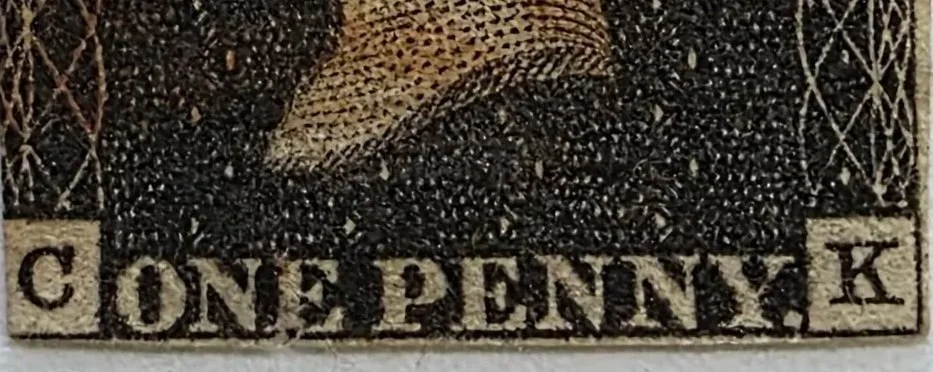
The C K corners.
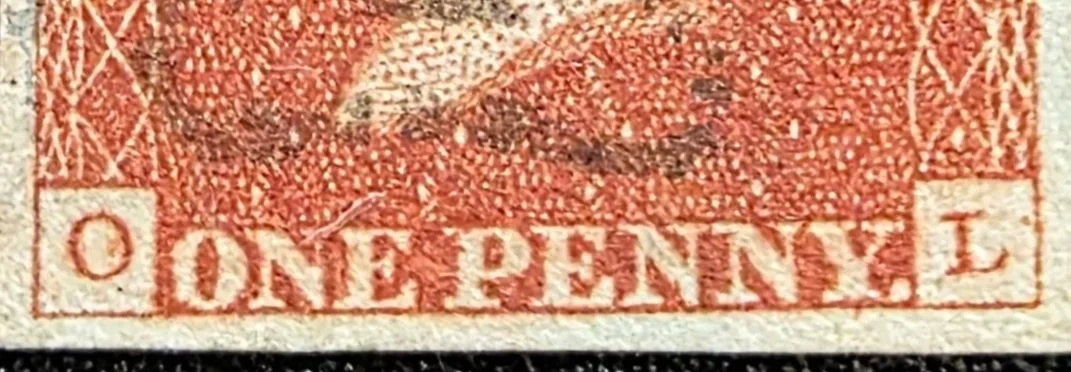
O L on the Red
But the Penny Black had a flaw: the black cancellation marks were difficult to see against the dark ink. Postal clerks needed something unmistakable, something that could not be cleaned away by a determined sender. And so, in 1841, the design was reissued in red‑brown. The Penny Red — my example from position OL — is identical in every respect except colour, yet it feels different. Where the Penny Black is austere and formal, the Penny Red has a warmth to it, a sense of being the everyday workhorse of Victorian correspondence. It would remain in use for decades, quietly carrying the thoughts, worries, and affections of millions.
Together, the Penny Black and Penny Red form a pair of bookends at the start of modern postal history. One is the bold experiment; the other, the perfected tool. They are not rare in the strict philatelic sense — millions were printed — but they are rare in the way that matters: they are the first. Every stamp that followed, in every country, owes something to these two.
Why British Stamps Don’t Say “United Kingdom”
One of the quiet privileges of being first is that you never have to introduce yourself. When the Penny Black appeared in 1840, it was the only postage stamp in the world. There was no need to print “Great Britain” or “United Kingdom” on it — the very existence of the stamp implied its origin. Every other country that later adopted adhesive postage had to include its name to avoid confusion, but Britain, having invented the concept, was exempt from the rule it had unintentionally created.
That tradition has continued unbroken to the present day. The United Kingdom remains the only country in the world whose stamps do not bear the country’s name. Instead, they carry the monarch’s profile — first Victoria, then Edward VII, George V, and so on — a visual shorthand that has become as recognizable as any national emblem. The portrait functions as both identifier and signature, a reminder that British stamps began as an extension of royal authority as much as postal necessity.
When the Universal Postal Union was formed in 1874 to standardize international mail, it required all member nations to print their names on their stamps. Britain was granted a permanent exception on the grounds of historical precedence. The monarch’s effigy was considered sufficient identification, and so it remains. Even today, in an age of barcodes and machine sorting, a British stamp can travel the world without ever declaring the country that issued it. The silhouette of the sovereign is enough.
There is something quietly elegant about this — a small nod to the fact that the entire global system of postage began with a single black stamp bearing the face of a young queen. Every stamp that followed, from every nation, is in some way a descendant of that first experiment. Britain’s stamps do not need a name because, in a sense, they are the name.
A Personal Note
When I place these two stamps here in my digital commonplace, I’m not just cataloguing acquisitions. I’m acknowledging the beginning of a story that continues into my own life — a story about communication, connection, and the strange endurance of paper in a world that keeps trying to leave it behind. These two stamps, CK and OL, are small reminders that even the most ordinary objects can carry the weight of history, if only we take the time to look closely.