My Pirate Coins…
Every Christmas brings its share of surprises—some wrapped in paper, some in sentiment. But in December 2024, I unwrapped something that felt like it had time-traveled straight from a Spanish galleon: two battered coins, gifted by my friend Wayne along with a certificate signed by an anthropologist named Frank Bergevin. The note was simple: “Authentic Spanish Cobs and Maravedis, circa 1600–1700 AD.” I blinked. Then I stared. Then I did what any curious collector would do—I started digging.
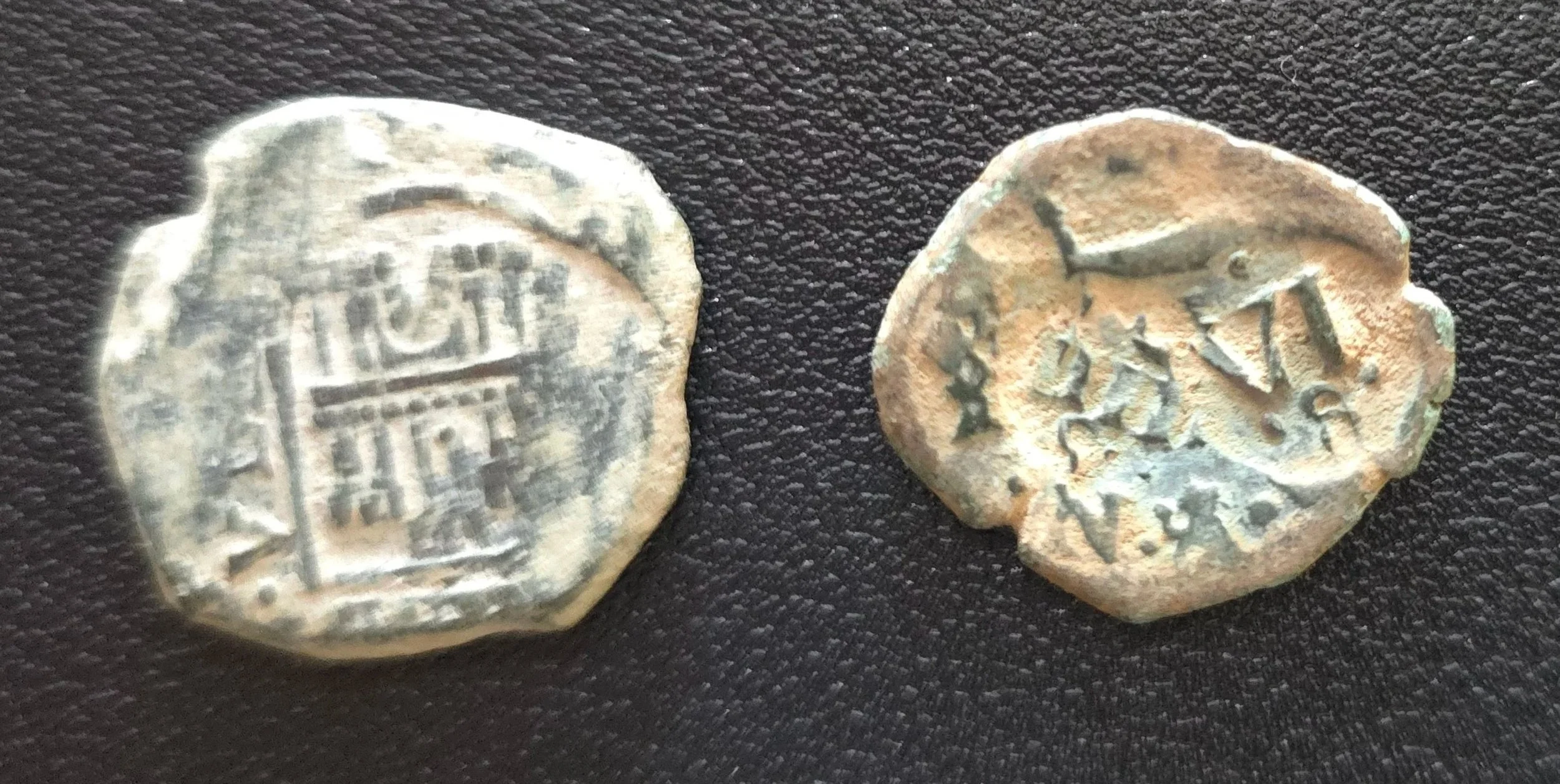
Cobb to the left and Marevedis to the right.
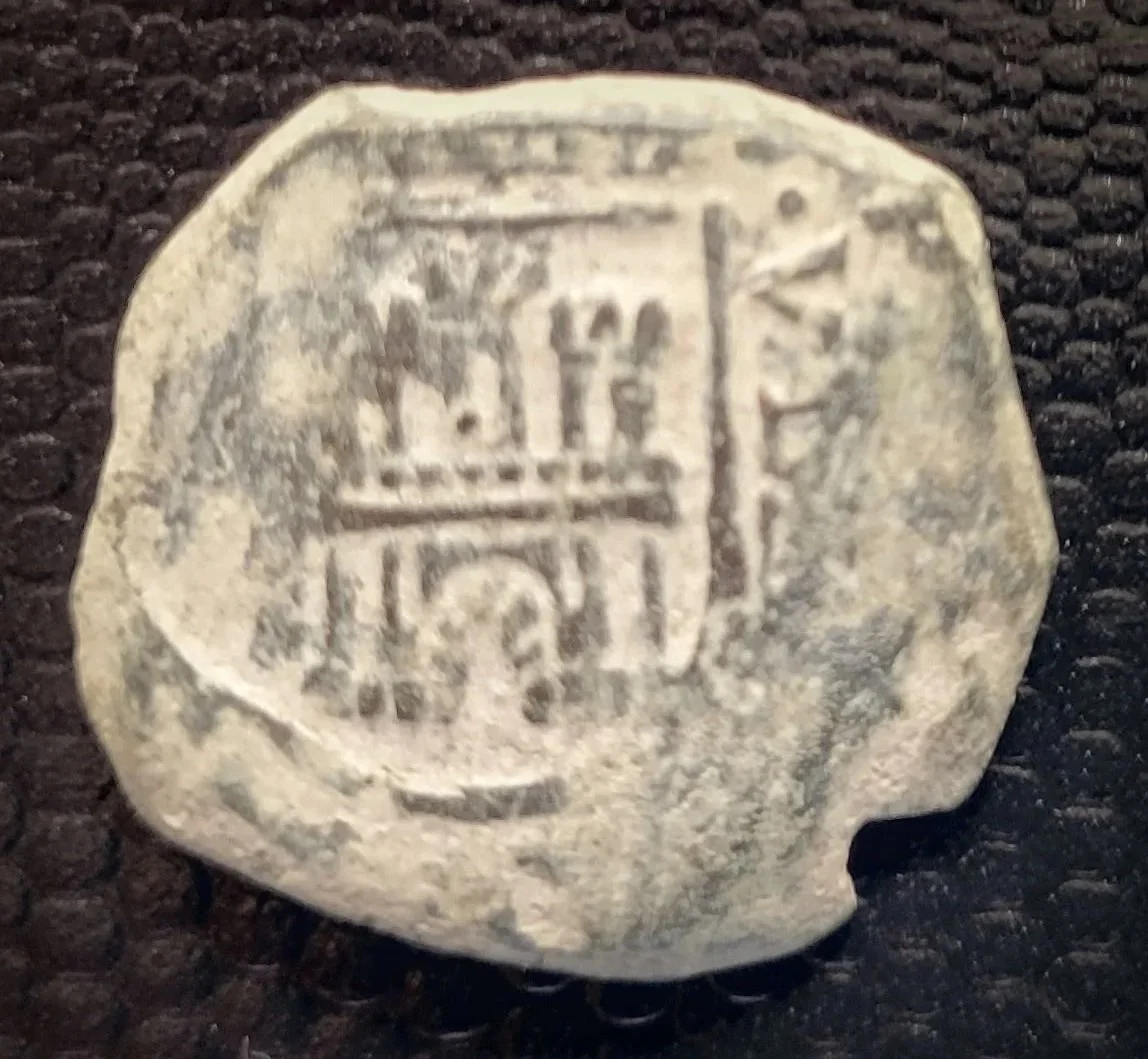
This is the Spanish Cob
Two Coins from the Spanish Atlantic World
Silver Cob (Spanish Colonial, early 18th century)
A hand‑struck silver cob from the Mexico City mint, likely issued under Philip V in the early 1700s. The irregular shape is characteristic: these were cut from silver bars and hammered quickly, valued by weight rather than appearance. One face carries the cross of Castile and León with lions and castles; the other shows the Pillars of Hercules rising from stylized waves with the motto PLVS VLTRA — Latin for “More Beyond.” Spain adopted the phrase after the discovery of the Americas, overturning the old belief that the Strait of Gibraltar marked the edge of the known world. On the coin, the pillars and the motto together announce Spain’s claim to an empire extending past the limits of antiquity.
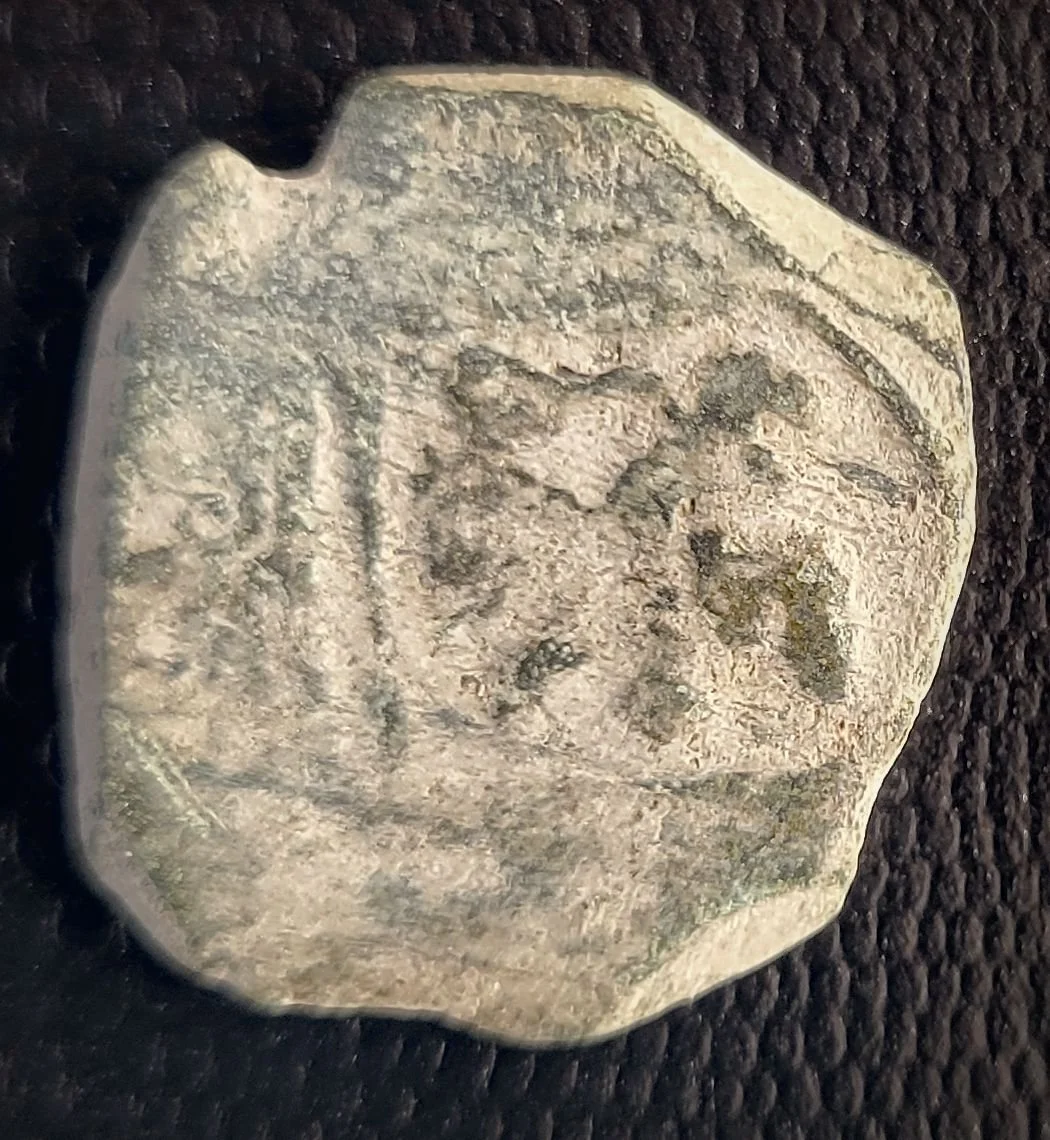
Cobb, the slightly less legible reverse side.
This type of coin formed the backbone of Atlantic commerce. High‑purity silver, universally recognized, and compact enough to move in bulk — exactly the sort of money that passed through colonial ports, merchant hands, and pirate chests. Although copper cobs do exist, they were rare emergency issues and look nothing like this piece: thick, crude, and dark, usually bearing only a simple crowned monogram and never the pillars‑and‑waves design. The coin here is a standard silver issue, shaped by hand and circulation rather than aesthetics, and entirely at home in the economic world of the early 18th‑century Caribbean.
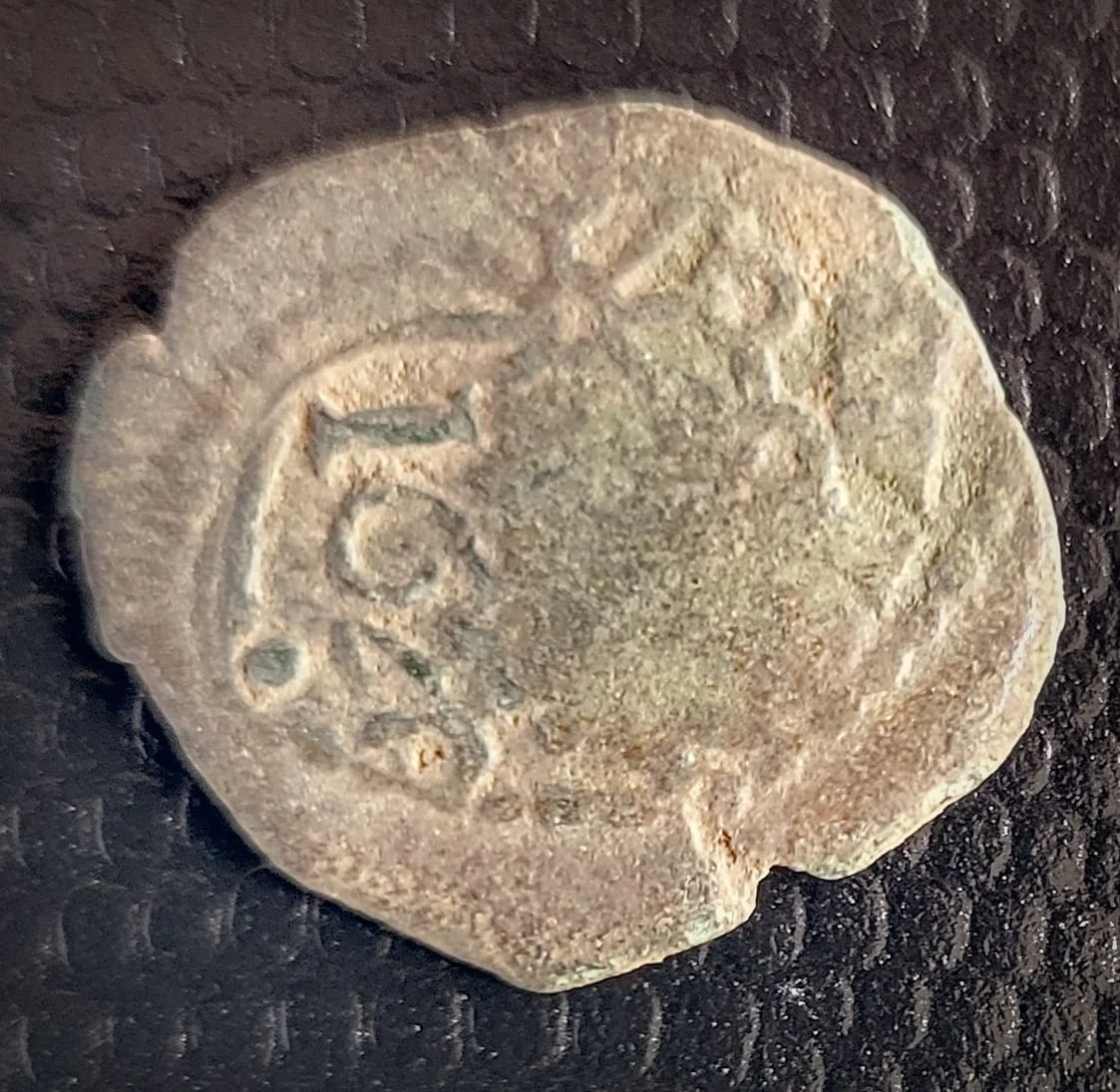
The Marevedis
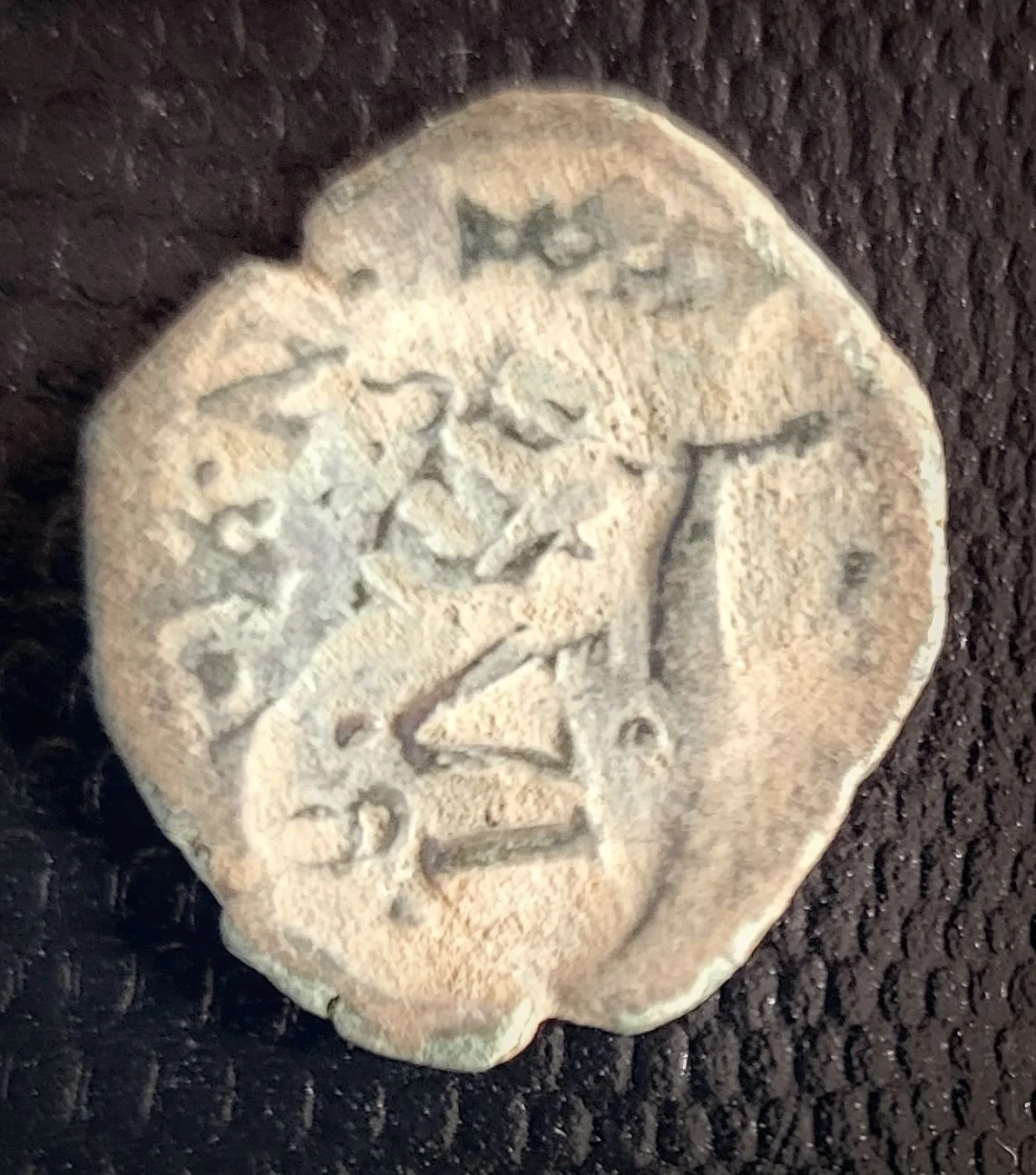
Marevedis reverse
Copper Maravedí (Spain, late 17th–early 18th century)
A small copper maravedí, the everyday coin of Spain and its colonies. By this period the maravedí had become a low‑value copper denomination, used for market purchases, tavern bills, and the ordinary transactions of sailors and townspeople. These coins typically bore a crowned monogram or bust of the monarch on one side and a shield or value mark on the other.
Unlike the silver cobs, maravedís were not treasure. They circulated in the background of colonial life — the coinage of daily routine rather than long‑distance trade. The example here fits that role: modest copper, darkened by age, and representative of the small change that kept local economies moving.