The Last Danish Letter Stamps
Every stamp collector maintains, whether they realise it or not, a necrology of countries that no longer exist. Our albums are filled with ghosts.
Some nations died violently: Czechoslovakia torn in two, Yugoslavia shattered into seven pieces, the Soviet Union collapsing into fifteen new republics. Others slipped away more gently — Tanganyika and Zanzibar merging into Tanzania, North and South Yemen reuniting after decades apart.
Some countries lived so briefly their stamps feel like hallucinations. Biafra issued stamps for three years before being reabsorbed into Nigeria. The Republic of Texas managed a single issue in 1836. Hatay, that sliver between Turkey and Syria, produced stamps for exactly one year before voting to join Turkey in 1939.
Empire built this graveyard as thoroughly as war dismantled it. The stamps of British India, French Indochina, and the Belgian Congo now represent nations erased by colonial ambition, their postal systems absorbed into metropolitan ones, then later reborn under new names when independence arrived.
Name changes killed countries on paper while leaving them intact in fact: Ceylon became Sri Lanka, Rhodesia became Zimbabwe, Siam became Thailand, Persia became Iran. The Gold Coast transformed into Ghana. Each shift rendered entire stamp issues obsolete — artifacts of identities discarded or reclaimed.
But Denmark in 2025 accomplished something unprecedented: it became the first country to effectively cease issuing stamps not because the nation ended, but because the very concept of letter post had become obsolete. The Kingdom of Denmark continues, prosperous and stable, but its postal service — the stamp‑issuing institution born in 1851 — simply walked into the digital age and closed the door behind it.
This makes Denmark unique in the philatelic graveyard. It didn’t fall to war, revolution, merger, or conquest. It died of irrelevance. Of evolution. Of a world that found faster ways to send words across distance.
When Denmark announced that it would end its letter‑post service after centuries of continuous operation, I felt an odd tug of responsibility. If a country was going to close the book on its own postal era, the least I could do was save a line from the final chapter. So I decided to buy the last Danish stamps ever issued for letter post.
I ordered them directly from Nordfrim, the philatelic firm in Denmark. They offered mint examples and covers cancelled on the final day of acceptance — and ordering from within Denmark felt like the most authentic way to honour the moment. What I did not consider, in my enthusiasm, was the practical consequence of buying stamps from a country that had just stopped accepting stamped letters.
Denmark, of course, never adopted the Euro. It has held fast to the Krone, and while I remembered that much, I had absolutely no memory of the exchange rate — if I ever knew it at all. I simply assumed the difference would be modest.
The bank statement corrected that assumption with admirable force. Nearly fifty dollars for four stamps: two mint, and two cancelled on the last day you could legally post a stamped letter in Denmark. For a moment I wondered whether I had been a little too swept up in the romance of postal history.
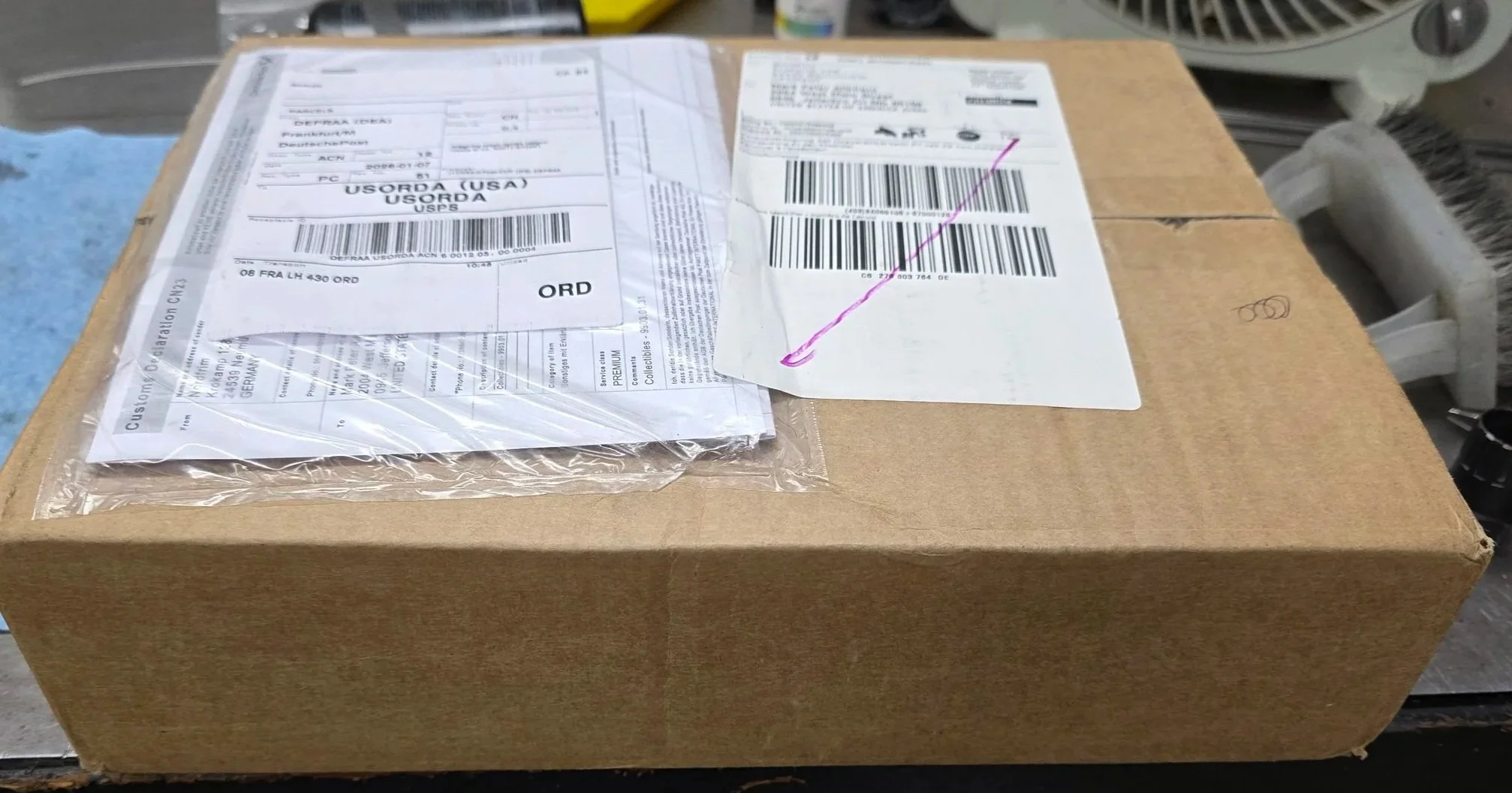
But then the parcel arrived…
The Dates.
The dual dates on the final issue tell their own story:
18 December 2025 — Last day Denmark accepted stamped letters.
This is why my cancellation reads “18.12.2025 – Sidste dag for brevbefordring” (Last day of letter conveyance). After the 18th, you could no longer post a stamped letter at all.
30 December 2025 — Last day Denmark delivered letters already in the system.
The service wound down over those final days, delivering the last remnants of four centuries of correspondence.
And suddenly the whole thing made perfect, ironic sense. To commemorate the end of Denmark’s letter post, I had paid handsomely for a box so large you could have shipped four copies of War and Peace inside it — precisely because Denmark no longer had a system in place to deliver something as delicate as stamps. When a nation retires its letter post, even buying stamps becomes a parcel‑only luxury experience. The cardboard alone felt like a commentary.
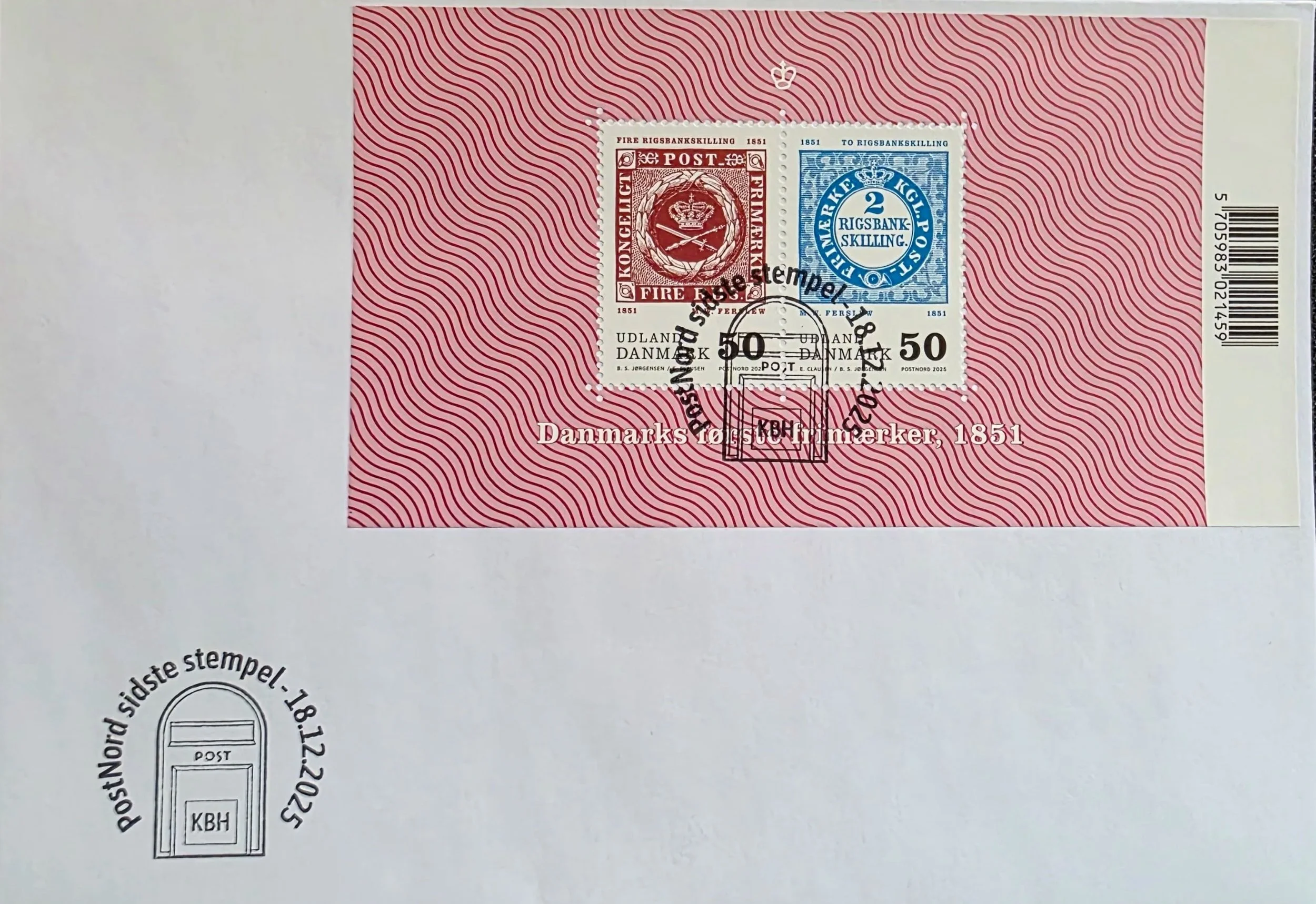
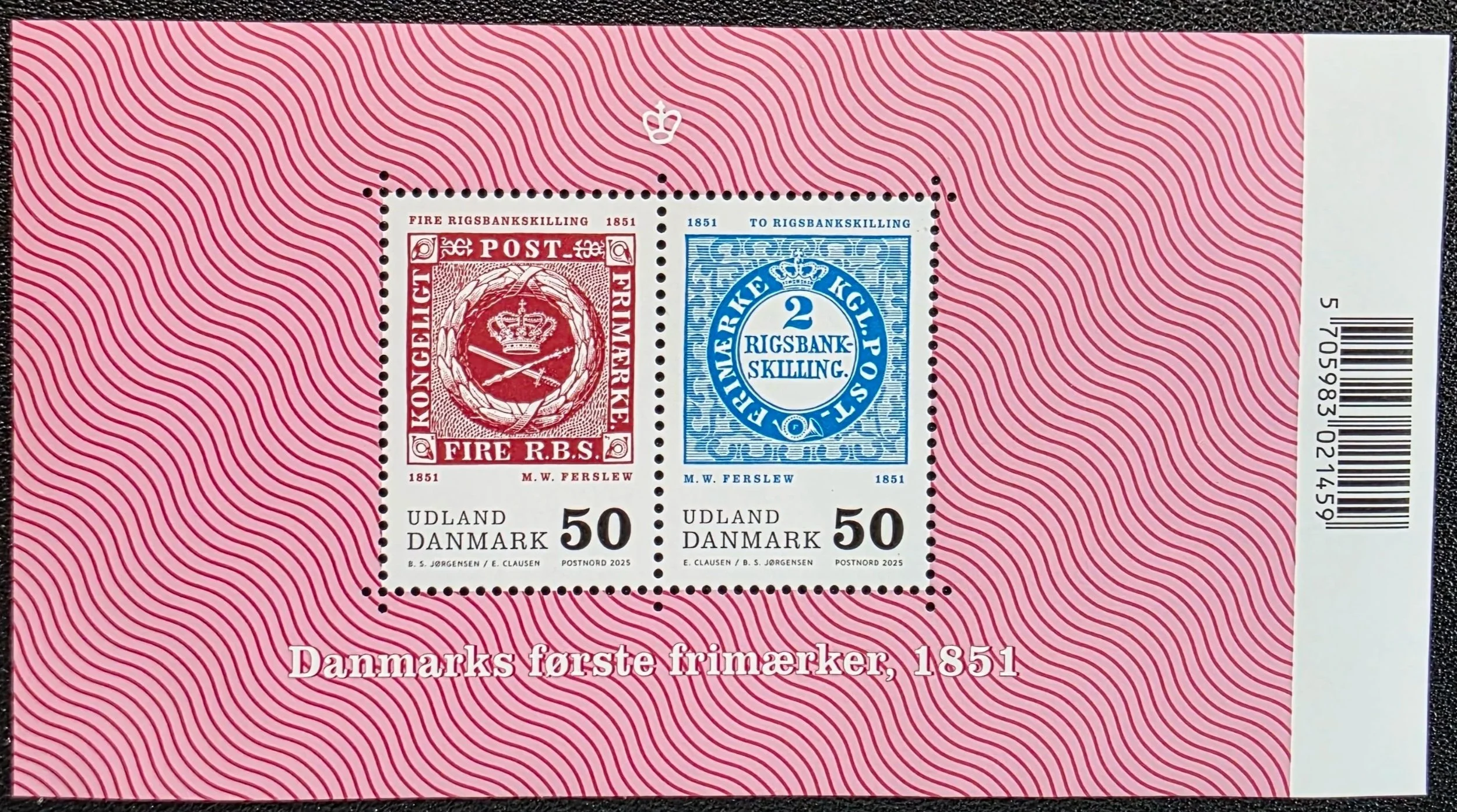
The Translations.
“Danmark” — Denmark
“Brev” — Letter / letter post
“Sidste dag” — Last day
“Sidste dag for brevbefordring” — Last day of letter conveyance
“18.12.2025” — the final day stamped letters were accepted
These little inscriptions now read like epitaphs — the final printed words of a postal system that carried Denmark’s correspondence from the age of Christian IV to the age of digital everything.
The History
The Danish postal service began in 1624, under King Christian IV.
That’s the beginning of letter post as a national institution.
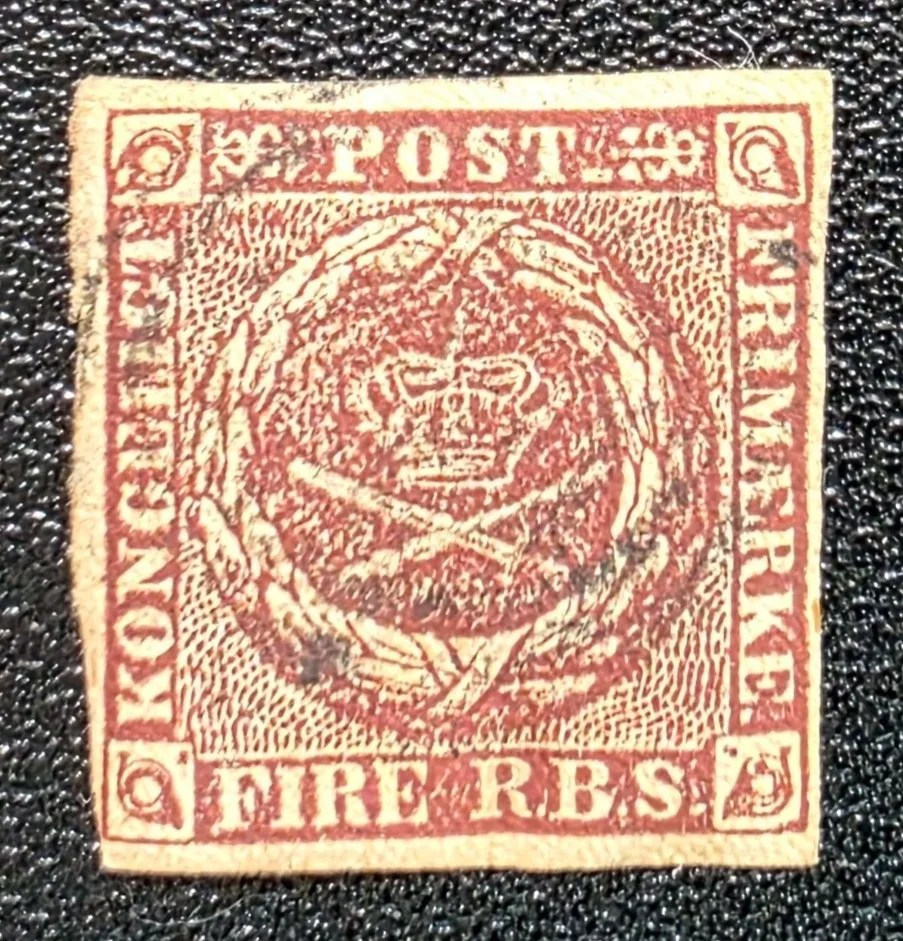
Danish postage stamps began in 1851.
That’s the beginning of the stamp‑based era.
So, when Denmark ended letter post in 2025, it closed a 401‑year‑old service, even though stamps themselves span a 174‑year chapter within that longer story.
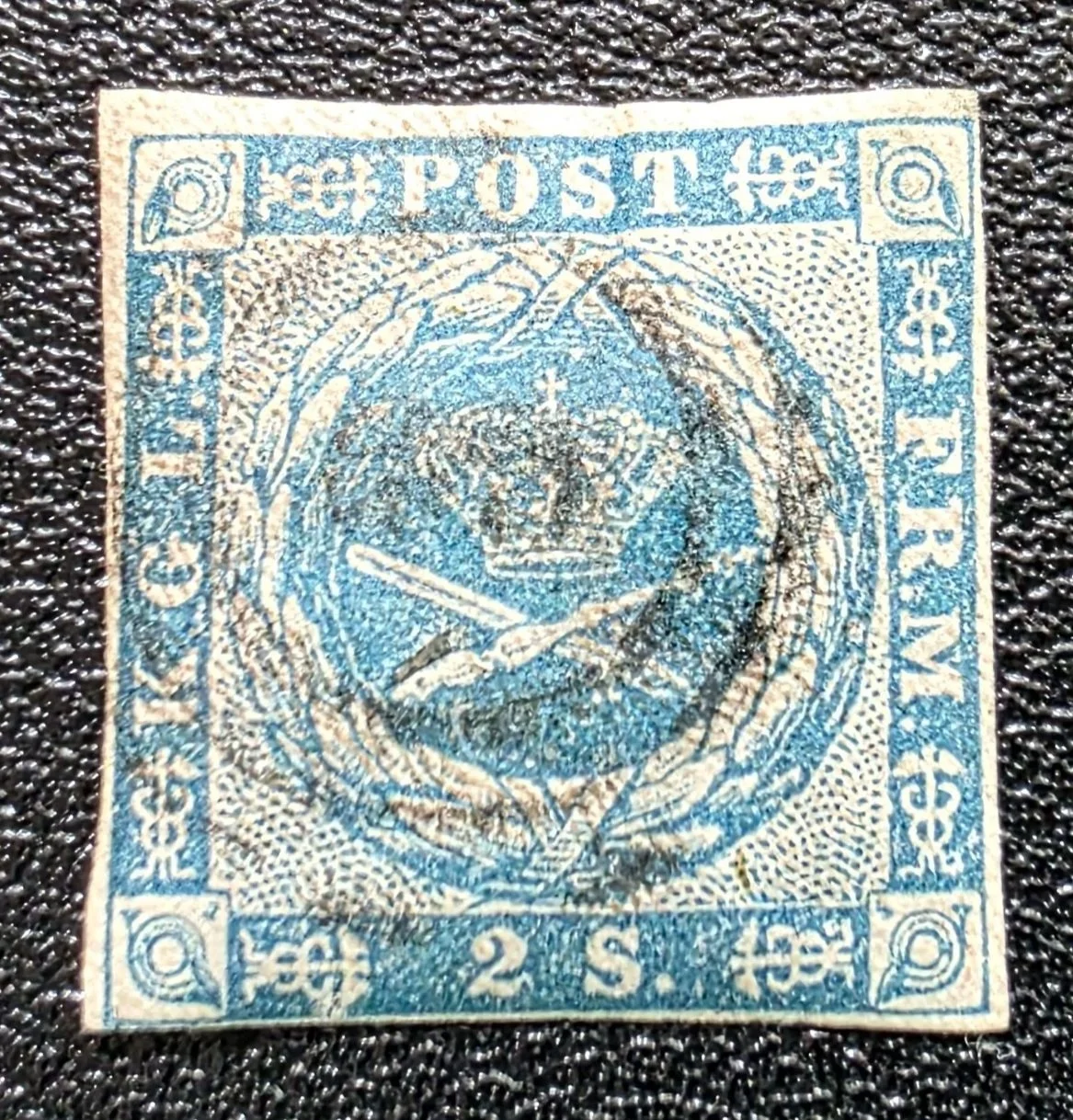
My collection holds both Denmark’s first stamps from 1851 and its last from 2025 — deliberately designed to echo those originals. Between them lies the entire lifespan of Danish letter post in the stamp era, alpha to omega. Every other dead country in my albums was killed by history’s violence or ambition. Denmark alone died of natural causes, having simply lived long enough to see its purpose fulfilled and surpassed.
Perhaps in fifty years collectors will hold the final stamps of Norway, Sweden, Finland — the other Nordic nations already following Denmark’s postal lead. Perhaps stamps themselves will join telegrams and Morse code in the museum of obsolete communications. Or perhaps we will hold Greenland’s last stamps as part of Denmark, marking not technological evolution but territorial loss — another addition to the graveyard, carved not by progress but by power.
Denmark will always be the first to choose its postal ending. Whether it can prevent other endings being chosen for it remains to be seen.